when speaking about ISO tank maintenance let us know first what are ISO tanks (also known as ISO containers, Tanktainers, or container ISO tanks) provide a vital function in the supply chain worldwide by transporting liquids, gases, and food-grade products safely and efficiently across continents. Provided that it contains chemicals, fuels, or edible oils, these specialized containers are designed to international standards for handling bulk liquids and are proven to perform reliably in extreme temperature ranges and oppressive conditions.
Like an invaluable, high-value asset in industry, an ISO tank must have care and maintenance with the appropriate timeline to keep it safe, reliable, and sustainable in the long run. When maintenance is left unattended and not in accordance with a routine or issued timeline, it may result in some potentially troublesome and costly events, such as leaks, contamination, and loss of compliance with strict regulatory requirements.
In this article, we will present best practices for a corporation to maintain the value of economical ISO tanks for an extended service life for its barrels, covering cleaning, testing, preventative care, and looking at present-day considerations for tank management.
Why ISO tank maintenance is vital
ISO tank containers are constructed to last for many years of service, with proper care, and can retain their integrity for 20–30 years or longer. Operating ISO tanks are exposed to a wide variety of transportation materials, including chemicals, gases, and foodstuffs. All this exposure takes its toll on the integrity of any tank containers. Repeated usage without regular inspection and cleaning can lead to contaminants and safety risks, regardless of the quality of your tank.
- Contamination risks: Residuals left in the tank can contaminate new loads
- Structural damage: Corrosion and stress can weaken the tank shell.
- Safety hazards: Undetected leaks may endanger workers, cargo, and the environment.
Thus, regular means of inspecting each ISO tank, such as vacuum leak testing, vacuum box testing, and general vacuum testing procedures, must be undertaken to ensure the ISO tank you are working with is sealed appropriately, providing safety for your next job. Moreover, maintaining an ISO container is not only a technical process but also a compliance issue. Almost all global regulatory conditions require inspections of ISO tank containers at intervals. Proper predictive maintenance will save both time and money in the long term.
Common Types of ISO Tank Containers
Not all tanks are created equal. There are multiple types of tank containers, each designed for a specific purpose:
- T11 ISO Tank: The most widely used iso tank, T11, is suitable for a variety of chemicals.
- Chemical ISO Tank: Designed to transport hazardous liquids that require special handling.
- ISO Tank 40ft: A larger capacity tank container, often used for bulk haul operations.
- Isotainers and Bulkhaul ISO Tank: Specialized designs for specific industries.
- Eurotainer ISO Tank: A global standard widely used in international trade.
Sometimes, it may not be desirable for companies to purchase a tank for definitive ownership. Tank container leasing and ISO tanks for rent have become popular ways to pay for flexibility and to have an option that does not have to be paid for. No matter what type of ISO container is being used, all ISO containers need to be consistently managed and maintained to extend their longevity.
ISO tank maintenance Best Practices
A. Cleaning and Sanitization
A key factor in maintaining an ISO tank is a diligent cleaning process. After every use, remnants of the prior load pose a safety hazard. If left in place, the residues can taint future loads and erode tank interiors!
TCS, for instance, employs computerized cleaning systems that effortlessly purge both hazardous and non-hazardous materials from ISO tanks. This provides peace of mind, knowing international safety standards are being fulfilled. The cleaning principles to neutralize loss in the iso tank are not greatly different from other systems, such as septic tank cleaning, septic system cleaning, or sewage tank cleaning. Like septic systems, an ISO tank container needs regular servicing to avoid blockages, contamination, and system failure.
Undoubtedly, this is why companies search for services like “septic maintenance near me,” “septic tank pumping,” and “septic tank emptying,” because cleaning is at the foundation of long-term asset health, whether for industrial tanks or domestic systems.
B. Testing and Inspections
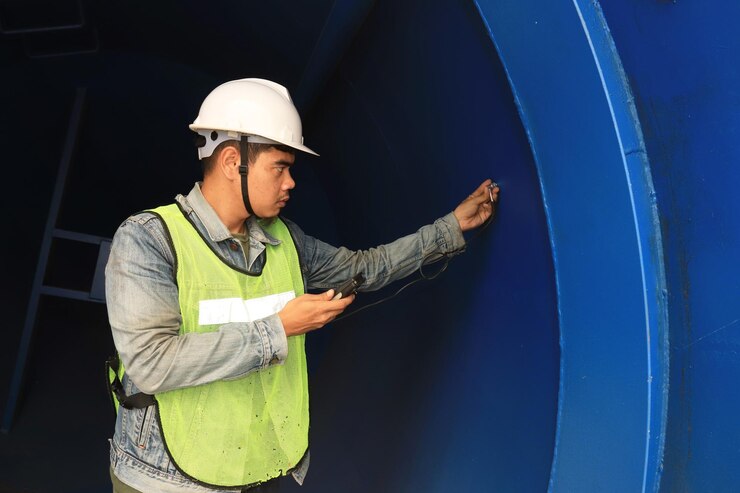
Beyond cleaning, inspection is vital. Some of the most reliable methods include:
- Vacuum Leak Testing: Detects even the smallest leaks in the tank walls or joints.
- Vacuum Box Testing: Ensures welds and seams are airtight.
- Vacuum Test: A general safety measure to validate tank integrity.
It is to ensure the ISO tank fulfills both safety and environmental requirements. Without routine inspections, companies could face fines, downtimes, and accidents.
C. Preventive Maintenance
Preventive care helps catch small problems before they become major failures. This includes:
- Replacing worn-out gaskets, seals, or valves.
- Regular lubrication of moving parts.
- Applying protective coatings to prevent external corrosion.
- Scheduling routine inspections to avoid unexpected breakdowns.
Good ISO tank management makes companies consider tanks as long-term assets. Just like when using a cleaner for a septic tank to keep the home system healthy, you need professional-grade cleaning and monitoring equipment for industrial containers.
Choosing the Right Partner for ISO tank maintenance
Choosing a trusted partner for ISO tank management, like a capable organization with a high level of service, is just as important as performing the services. A provider who has experience and knowledge about ISO tanks versus a provider who is not trained or at least experienced could have an impact on reducing issues, quality, and customer experience.
- Comprehensive cleaning and sanitization for hazardous and non-hazardous materials.
- Repair and testing facilities that comply with international standards.
- Storage solutions in bonded areas for extended periods.
- Customs clearance support, which saves customers time and money.
For consumers, the value brings peace of mind: instead of working with one vendor to deal with septic tanks followed by more vendors for the same aspects of service done to the septic tank (ex, septic cleaning, pumping, and so on), they would prefer “one-stop” aspects of service. And they seem to prefer the same approach in all aspects of ISO tanks.
Storage and Bonded Area Advantages
Another key step of ISO tank management is the storage of tanks in a secure warehouse. Companies often face delays related to customs clearance, which can have consequences on the efficiency of their supply chains. A developed bonded area, like the one TCS has and maintains in Alexandria, may present your business with an opportunity to gain a competitive advantage.
This would allow ISO tanks and containerized ISO tanks to be safely secured for an extended period (longer than nine months) while the paperwork is worked out with customs. This provides assurance not only for Egyptian law compliance but also guarantees the ISO tank is secured away from the unpredictability of environmental factors. For companies involved with international logistics, this is a very helpful component that can save them both time and money while maintaining involved customs support with the facility. For these reasons, dedicated bonded areas should top the proclamations of your iso tank management process today.
Future Trends in ISO tank maintenance
The advancements in the future of ISO tank containers are focused on technology and commitment to sustainability. New ISO tank maintenance & management systems are emerging that efficiently use real-time monitoring to determine that the tank is functioning/operating properly. Computer cleanings help to eliminate human error and add consistency to the cleaning experience.
Sustainability is also playing a noticeable role in the future of the ISO tank. Environmentally friendly cleaning chemicals, recycling of rinse water, and less waste are all gaining popularity throughout the industry. Just as septic systems continue to evolve with more environmentally friendly options, ISO tank containers are also quickly adopting more sustainable practices.
Demand for international logistics is also a contributor to the continued expansion of the tank container types. Companies are increasingly making the choice to utilize leasing bodies to quickly meet demands created in the marketplace.
Final Thoughts
The longevity of your ISO tanks will depend on some combination of ISO tank maintenance and testing, preventative, and partner selection. Whether you are comparing vacuum leak testing with sewage tank cleaning, the rationale is consistent: a clean and well-maintained tank is safer, offers better efficiency, and increases asset value. Whether you own one ISO container or you manage a large fleet of tanktainer units, the implementation of these practices will, without question, protect your investment for years, if not decades. The trick is to, ultimately, work with a trusted service provider that will provide you with a mix of expertise, technology, and compliance.
In Alexandria, TCS (Tank Container Services, Inc.) is more than your basic maintenance shop. We are the only bonded-area cleaning station in the Alexandria area, with full-cycle (cleaning, sanitizing, repair, storage, and customs) solutions all in one place. With the latest computerized systems, you can guarantee a high standard of cleaning for both hazardous and non-hazardous cargoes. Finally, we have tested and certified vacuum box testing and vacuum leak testing protocols, which will ensure compliance with safety and international guidelines.
When you work with TCS, you not only extend the life of your ISO tanks but also get the extra peace of mind knowing that the assets are being treated with world-class standards, maximum efficiency, and dependable reliability. In short: TCS is not only a service provider, but also your long-term partner in ISO tank management.
Frequently Asked Questions (FAQs)
1. What is an ISO tank, and why is it important?
An ISO tank (also called an ISO container or tanktainer) is a standardized container for transporting various liquids, gases, and chemicals around the world in a safe way. The ISO tank acts as a way to manage cargo efficiently, maintain compliance, and protect the cargo.
2. How often should ISO tanks be cleaned and tested?
Regular ISO tank cleaning and inspection are important to ensure cargo safety after every cargo transport. Other tests should also be performed on scheduled maintenance intervals to ensure testing standards. Tested methods include vacuum leak testing, vacuum box testing, and full vacuum testing.
3. What types of ISO tank containers are available?
There are various types of tank containers, such as the ISO tank T11, the chemical ISO tank, and the larger ISO tank 40 ft. Companies could also consider tank container leasing or ISO tanks for rent based on their business needs.4. Why should I choose TCS for ISO tank maintenance?
TCS provides a one-stop solution for ISO tank management in Egypt, including cleaning, sanitization, repair, bonded storage, and customs clearance. TCS uses advanced systems and international standardization to extend the life of ISO tank containers and reduce operational costs.


